 Reviews

 Proudly American
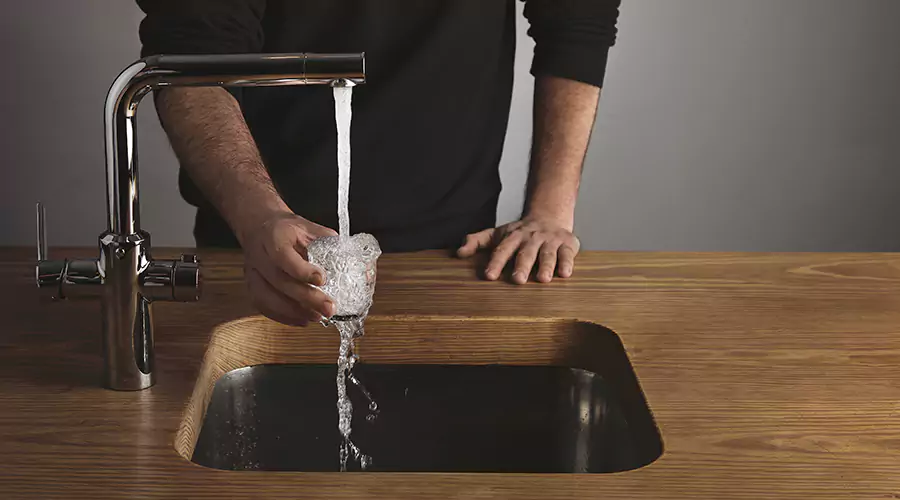
Low water pressure can make showers weak, slow down dishwashing, and leave appliances underperforming. The good news is that many pressure problems come from simple causes you can fix yourself, like clogged aerators, partially closed valves, an overdue whole house filter, or the need for water leak repair. This guide shows a safe DIY process to increase water pressure, starting with the easiest checks and moving toward deeper fixes.
First: Know the Difference Between Pressure and Flow
People often say “low pressure” when the real issue is low flow.
- Water pressure (PSI): the force in your plumbing
- Water flow: how much water comes out per minute
A clogged aerator can reduce flow at one faucet even when house pressure is normal.
Step 1: Test Your Water Pressure (So You Don’t Guess)
Before changing anything, measure your home’s pressure.
What you need?
A water pressure gauge (screws onto a hose style spigot)
How to test?
- Make sure no one is using water inside.
- Screw the gauge onto an outdoor spigot or laundry faucet with hose threads.
- Turn the spigot fully on and read the PSI.
What numbers mean?
- 40 to 60 PSI: usually ideal for most homes
- Below 40 PSI: often feels weak
- Above 80 PSI: too high and can damage plumbing over time
If your reading is already in the normal range, your “low pressure” problem is likely a local clog, a fixture issue, or pipe restriction.
Step 2: Fix the Most Common Causes (Fast DIY Wins)
Clean faucet aerators and showerheads
This is the number one fix when only one or two fixtures are weak.
How?
- Unscrew the aerator or showerhead.
- Rinse out grit.
- Soak in white vinegar for 20 to 30 minutes if you see mineral buildup.
- Reinstall and test.
Make sure shutoff valves are fully open
Partially closed valves can reduce pressure noticeably.
Check these
- Valves under sinks and behind toilets
- The main shutoff valve
- The valve near the water meter (if accessible)
Tip: For a lever style ball valve, the handle should be parallel to the pipe when open.
Replace a clogged whole house filter
If you have a whole house filter and it has not been changed in a while, it can restrict water to the entire home.
Signs
- Low pressure everywhere
- Pressure slowly got worse over time
- Filter change is overdue
Fix
Replace the cartridge and confirm any bypass valves are set correctly.
Step 3: Find Out If the Problem Is the Whole House or Just One Area
Use this quick test:
- If only one faucet is weak, suspect aerator, cartridge, or local valve.
- If every fixture is weak, suspect main valve, filter, pressure reducing valve, leak, or supply issue.
- If pressure is weak only on hot water, the issue could be at the water heater shutoff, a clogged line, or sediment related restrictions.
Step 4: Check for Leaks That Steal Pressure
Leaks can reduce pressure because water escapes before it reaches your fixtures.
Quick leak check
- Turn off all water use.
- Check your water meter (if you can access it safely).
- If the meter shows water moving, you may have a leak.
Other clues
- Higher water bill with no usage change
- Damp spots, moldy smell, or water sounds when fixtures are off
If you suspect a hidden leak, treat it as urgent. Fixing it can improve pressure and prevent damage.
Step 5: Adjust a Pressure Reducing Valve (PRV) Carefully
Many homes have a pressure reducing valve that keeps incoming city pressure at a safe level. If it is set too low or failing, your house pressure can drop.
How to know if you have a PRV?
It is often near where the water line enters the home, sometimes close to the meter. It typically has an adjustment screw and a lock nut.
Safe DIY adjustment steps
- Attach your pressure gauge at an outdoor spigot.
- Loosen the PRV lock nut slightly.
- Turn the adjustment screw a small amount (about a quarter turn).
- Recheck the pressure on the gauge.
- Repeat slowly until you reach a reasonable target.
Important safety notes
- Increase pressure gradually and test after each adjustment.
- Do not exceed 80 PSI.
- If turning the screw does nothing, the PRV may be failing.
- If the PRV is corroded or leaking, stop and call a plumber.
A working PRV adjustment can be the biggest DIY improvement when the whole house is low.
Step 6: Address Pressure Drops During Use
If pressure is fine at first but drops when you run multiple fixtures, you may be hitting a supply limitation.
Common causes
- Undersized plumbing in older sections of the home
- Heavy mineral buildup narrowing pipes
- Failing PRV
- Partially closed main valve
- A clogged meter screen (utility side in some areas)
DIY steps that can help:
- Confirm the main shutoff is fully open
- Replace filter cartridges
- Clean aerators and showerheads
- Test pressure again at different times of day
If your home has old galvanized steel pipes, internal corrosion can seriously restrict flow. That is usually not a DIY fix and may require professional evaluation.
Step 7: Consider a Booster Pump (When DIY Fixes Are Not Enough)
A water pressure booster pump can increase pressure, but it is not the first step.
When a booster pump makes sense
- Your pressure is consistently low at the gauge, even after PRV and valve checks
- The issue is not caused by clogs or a leak
- City supply pressure is simply low in your area
Why many people hire a pro for this?
Booster pumps involve plumbing and often electrical work, plus local code requirements. If you are not fully comfortable with that, a licensed plumber is the safer route.
Common Mistakes to Avoid
- Cranking the PRV adjustment too far too fast
- Ignoring a clogged filter or aerator and jumping to expensive solutions
- Running the house at high pressure over 80 PSI
- Repeatedly forcing old valves that are stuck or corroded
- Forgetting that low flow at one fixture is usually not a whole house pressure problem
FAQ
What is a good target PSI for a house?
Many homes feel best around 50 to 60 PSI. Always stay under 80 PSI to reduce leak risk.
Why is my shower pressure low but sink pressure is fine?
The showerhead may be clogged, or the shower valve cartridge may be restricting flow. Start by cleaning or replacing the showerhead.
Can I increase pressure by opening the main valve more?
Yes, if it was partially closed. If it is already fully open, opening it more will not help.
Final Takeaway
To increase water pressure in your house, start by testing your PSI with a gauge. Then handle the common DIY fixes: clean aerators and showerheads, fully open shutoff valves, replace whole house filters, and check for leaks. If your home has a pressure reducing valve, adjust it slowly while monitoring PSI, and never push pressure above 80 PSI. If pressure is still low after these steps, the issue may be pipe restrictions or supply limitations, and a plumber or booster pump may be the next move.